

A3: Role of neuropeptides and their receptors for tumorigenesis, tumorprogression and immune evasion


Prof. Dr. Eberhard Weihe
Dr. M. K.-H. Schäfer
Institut für Anatomie und Zellbiologie
Robert-Koch-Str. 8
35037 Marburg
phone: +49-6421-28-66247 (Weihe)
+49-6421-28 64036 (Schäfer)
Fax: +49-6421-28 68965
homepage: Mol-neuro
Cooperation within LOEWE
A4 - Gress
B3 - Müller
A6 - Hertl
Graduate student:
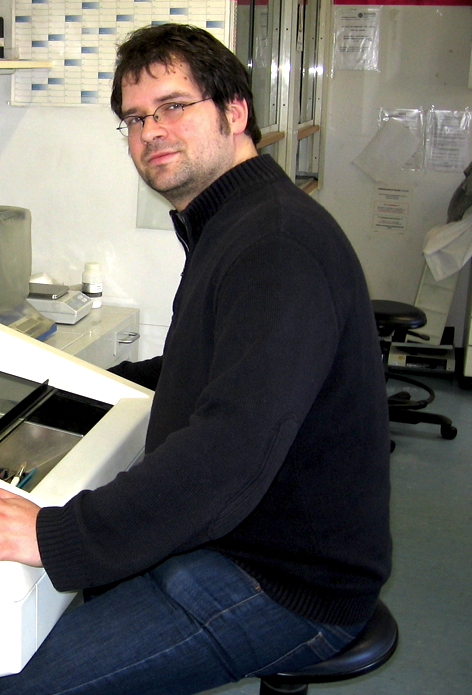
Personal advisory board: Weihe, Schäfer, Gress, Konur
| A3: Role of neuropeptides and their receptors for tumorigenesis, tumorprogression and immune evasion |
|
Many neuropeptides, in particular VIP (Vasoactive Intestinal Peptide) and PACAP (pituitary adenylate-cyclase activating peptide), members of the secretin/glucagon/VIP peptide family have - in addition to their intrinsic functions in the CNS – important modulatory roles in the immune system and interact with many cytokines and other immune modulating molecules to govern immune responses. Such pleiotropic neuropeptides can also act peripherally as growth factors and influence tumor growth. PACAP like most other neuropeptides exerts its functions through G-protein-coupled receptors which are expressed by cells of the immune system and neurons. Three PACAP-specific receptors are known, PAC1, VPAC1 and VPAC2, which are linked to different intracellular signalling pathways. Furthermore, a variety of PAC1 splice variants of were identified. PACAP could be shown to act as an anti-inflammatory/immune suppressive modulator in addition to its antiapoptotic, neuroprotective properties in the CNS (DiCicco-Bloom et al. 2000, Nicot et al. 2001,Vaudry et al. 2000, 2002, 2003). Recently, it was reported (Nemetz et al. and Yazutaka et al. 2008) that PACAP antagonizes cancer development in experimentally induced chronic colitis. The assumption that PACAP and its receptors could be targets for a new innovative neuroimmune regulatory therapy stands to reason.
References:
Azuma YT, Hagi K, Shintani N, Kuwamura M, Nakajima H, Hashimoto H, Baba A, Takeuchi T. “PACAP provides colonic protection against dextran sodium sulfate induced colitis.” J Cell Physiol. 2008 Jul;216(1):111-9.
DiCicco-Bloom E, Deutsch PJ, Maltzman J, Zhang J, Pintar JE, Zheng J, Friedman WF, Zhou X, Zaremba T. “Autocrine expression and ontogenetic functions of the PACAP ligand/receptor system during sympathetic development.” Dev Biol. 2000 Mar 15;219(2):197-213. Nemetz N, Abad C, Lawson G, Nobuta H, Chhith S, Duong L, Tse G, Braun J, Waschek JA. “Induction of colitis and rapid development of colorectal tumors in mice deficient in the neuropeptide PACAP.” Int J Cancer. 2008 Apr 15;122(8):1803-9. Nicot A, DiCicco-Bloom E. “Regulation of neuroblast mitosis is determined by PACAP receptor isoform expression.” Proc Natl Acad Sci U S A. 2001 Apr 10;98(8):4758-63. Ravni A, Vaudry D, Gerdin MJ, Eiden MV, Falluel-Morel A, Gonzalez BJ, Vaudry H, Eiden LE. „A cAMP-dependent, protein kinase A-independent signaling pathway mediating neuritogenesis through Egr1 in PC12 cells.” Mol Pharmacol. 2008 Jun;73(6):1688-708. Epub 2008 Mar 24. Vaudry D, Gonzalez BJ, Basille M, Pamantung TF, Fontaine M, Fournier A, Vaudry H. “ The neuroprotective effect of pituitary adenylate cyclase-activating polypeptide on cerebellar granule cells is mediated through inhibition of the CED3-related cysteine protease caspase-3/CPP32.” Proc Natl Acad Sci U S A. 2000 Nov 21;97(24):13390-5. Vaudry D, Pamantung TF, Basille M, Rousselle C, Fournier A, Vaudry H, Beauvillain JC, Gonzalez BJ. “ PACAP protects cerebellar granule neurons against oxidative stress-induced apoptosis.” Eur J Neurosci. 2002 May;15(9):1451-60. Vaudry D, Falluel-Morel A, Basille M, Pamantung TF, Fontaine M, Fournier A, Vaudry H, Gonzalez BJ. “Pituitary adenylate cyclase-activating polypeptide prevents C2-ceramide-induced apoptosis of cerebellar granule cells.” J Neurosci Res. 2003 May 1;72(3):303-16. |
| Last Updated on Wednesday, 24 February 2010 10:30 |