

C3: Transcriptional regulation by tissue specific TAFs in coordination with bromodomain proteins

Prof. Dr. Renate Renkawitz-Pohl
Karl-von-Frisch-Straße 8
35043 Marburg
Cooperation within LOEWE
C2 - A. Brehm
C4 - U. Bauer
C1 - R. Renkawitz
C5 - S. Bauer
Graduate student
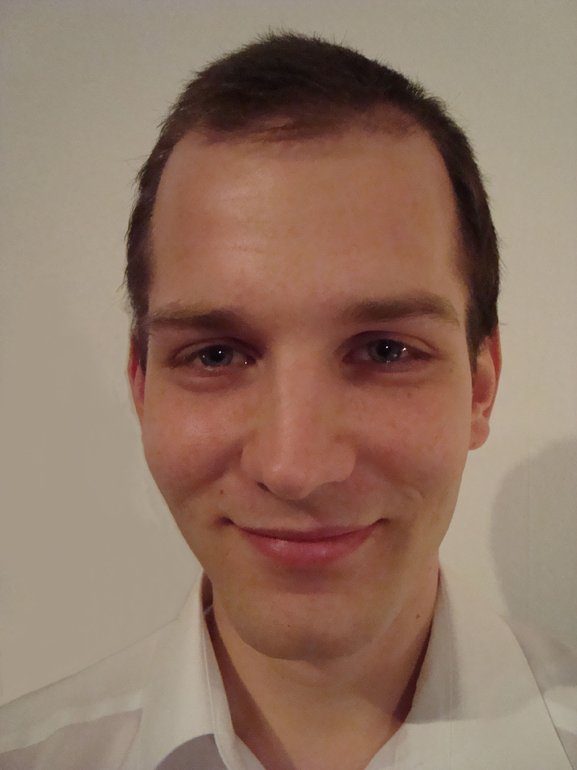
Michael Schipper
Personal advisory board: Renkawitz-Pohl, Brehm, S. Bauer, Konur
| C3: Transcriptional regulation by tissue specific TAFs in coordination with bromodomain proteins |
|
This project focuses on the transcriptional regulation of a set of co-regulated genes as well as the underlying chromatin remodelling process. This we investigate in two different systems namely spermiogenesis (funded by: Forschergruppe “Chromatin mediated biological decisions”) and the immune system. Concerning the last one we are interested especially in B cells with respect to inflammatory processes (funded by: LOEWE Schwerpunkt “Tumor and Entzündung). The TFIID complex is essential to initiate transcription by RNA-Polymerase II. In several differentiation systems, individual members of the TFIID complex are known to be tissue specific. This has particularly been well studied in the Drosophila male germ-line (Hiller et al., 2001; Hiller et al., 2004; Chen et al., 2005) in which testis-specific TAFs (tTAFs) belong to a testis-specific transcriptional complex. This TAF complex is essential for the transcription of a battery of genes the mRNAs of which are translationally repressed for certain times (for example those for chromatin remodelling in spermiogenesis, see Renkawitz-Pohl et al. 2005; Hempel et al., 2006). We supposed that this is coordinated by specific changes at the chromatin level. Indeed, we successfully started the investigation of bromodomain proteins (Brdtl-1; Brdtl-2) that mark the chromatin and participate in the regulation by tissue-specific TAFs (Barckmann, Rathke et al., in preparation, cooperation between Renkawitz-Pohl’s lab/Marburg, and Fuller’s lab/Stanford). Within the LOEWE Schwerpunkt we started to investigate a comparable situation in B cells. It is known that also B cells of vertebrates express a tissue-specific TAF variant. In vertebrates there are several Brdtl-1, and Brdtl-2 related bromodomain proteins. Here we plan to analyse whether also in the immune system TAFs and bromodomain proteins cooperate at the level of transcription/repression and chromatin remodelling. Therefore, we are cooperating with Prof. S. Bauer (Immunology) as an expert for primary cell cultures of B cells, T cells and macrophages. A well running system is available to induce immunological response by LPS/TNFα and corresponding cell culture systems for biochemical approaches. We first test the timing of expression of the tissue-specific TAFs and bromodomain proteins by RT-PCR at the transcriptional level and by immunohistology with available antibodies. A combination of data base searches, immunohistology, immunoprecipitation, and mass spectrometry will be applied to search for complexes in which tissue-specific TAFs and bromodomain proteins interact. This will be complemented by dominant negative approaches and antisense strategies. In the centre of interest is the identification of sets of target genes by Chip-Seq technology, which characterises inflammation at the molecular level. The parallel work in spermiogenesis (Drosophila) and vertebrate cell culture systems will complement each other and give principle insight into the coordinated gene expression programme during differentiation and inflammation. References Hiller MA, Lin TY, Wood C, Fuller MT. (2001). Developmental regulation of transcription by a tissue-specific TAF homolog. Genes Dev. 2001 Apr 15;15(8):1021-30. Hiller M, Chen X, Pringle MJ, Suchorolski M, Sancak Y, Viswanathan S, Bolival B, Lin TY, Marino S, Fuller MT. (2004). Testis-specific TAF homologs collaborate to control a tissue-specific transcription program. Development. 2004 Nov;131(21):5297-308. Epub 2004 Sep 29. Chen X, Hiller M, Sancak Y, Fuller MT. (2005). Tissue-specific TAFs counteract Polycomb to turn on terminal differentiation. Science. 2005 Nov 4;310(5749):869-72. Renkawitz-Pohl R, Hollmann M, Hempel L, Schäfer MA. (2005). Spermatogenesis. In: Comprehensive Molecular Insect Science, Vol. 1: Reproduction and Development. Elsevier BV. Editors: Gilbert I, Iatrou K, Gill SS. pp 157-177. Hempel LU, Rathke C, Raja SJ, Renkawitz-Pohl R. (2006). In Drosophila, don juan and don juan like encode proteins of the spermatid nucleus and the flagellum and both are regulated at the transcriptional level by the TAF II80 cannonball while translational repression is achieved by distinct elements. Dev Dyn. 2006 Apr;235(4):1053-64. |
| Last Updated on Monday, 15 June 2009 10:52 |