
TP5: Oncosome-mediated reprogramming of host cells

Prof. Dr. Robert Grosse
Pharmakologisches Institut
Karl-von-Frisch-Str. 1
35032 Marburg
Tel: +49 (0) 6421 28-65000
+ 49 (0) 6421 28-65600
email: Robert Grosse
Graduate student:

Haicui Wang
| TP5: Oncosome-mediated reprogramming of host cells |
|
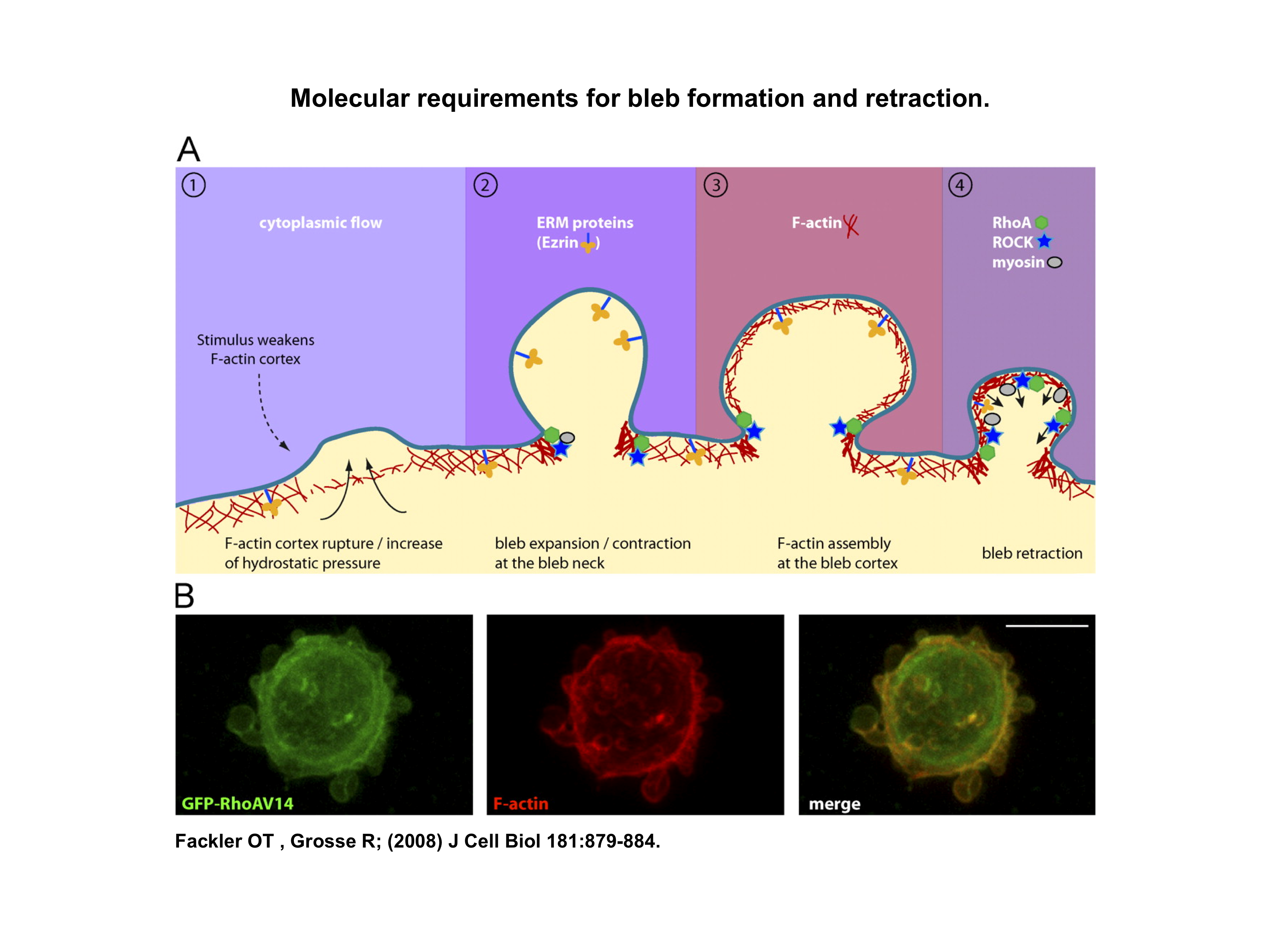
Microvesicles, which can also become shedded off from non-apoptotic plasma membrane blebs, are small membrane-enclosed structures. They are now considered as important players in the intercellular communication that participate in many pathophysiological processes such as chronical inflammation and cancer. Many metastatic tumor cells display elevated production of microvesicles, often associated with poor prognosis and more advanced disease. However, neither the intrinsic mechanisms leading to their overproduction in tumors nor the nature of their action on tumor-associated host or immune cells have been defined so far.
We previously identified the human formin Dia1 (DIAPH1) as one important actin regulator necessary for bleb-associated cancer cell invasion through 3D collagen through regulation of myosin function and contractility at the cell cortex (Kitzing et al., 2007 and 2010). However, we have not investigated how bleb-induced microvesicles may affect inflammatory or immune responses in vivo. A central goal is to analyze the effects of such bleb shedding on cancer-associated fibroblasts (CAFs) as well as on immune cell reprogramming and motility.
|
| Last Updated on Thursday, 10 February 2011 08:53 |